VI
VI
 EN
EN











Vietnam officially establishes domestic carbon trading exchange framework
Table Of Contents
Table Of Contents
On January 19, 2026, the Vietnam Government issued Decree No. 29/2026/ND-CP on the domestic carbon exchange, officially completing the legal framework for the organization and operation of the carbon market in Vietnam. This is considered a significant milestone, shifting greenhouse gas (GHG) emission reduction activities from an administrative management mechanism to a transparent, tradable market-based mechanism.
In the context of Vietnam's commitment to achieving Net Zero emissions by 2050, the establishment of a carbon exchange is not only a compliance requirement but also opens strategic opportunities for enterprises to proactively control emissions and enhance competitiveness.

The Government officially issued Decree No. 29/2026/ND-CP regarding the domestic carbon exchange.
1. Decree 29/2026/ND-CP: Legal Framework for the Domestic Carbon Exchange
According to Decree 29/2026/ND-CP, the domestic carbon exchange is organized with a full suite of professional operations:
-
Domestic registration and coding;
-
Ownership transfer;
-
Depository, trading, and settlement;
-
Reporting, information disclosure, and transaction monitoring.
Applicable subjects include market infrastructure operators (Hanoi Stock Exchange, Vietnam Exchange, Vietnam Securities Depository and Clearing Corporation), along with agencies, organizations, and enterprises participating in the trading of GHG emission quotas and carbon credits in accordance with environmental protection laws.
Linking the carbon market with the securities trading infrastructure demonstrates a centralized, standardized, and transparent management orientation that aligns with international practices.
2. Emission Quotas and Carbon Credits Must Undergo Centralized Registration
A key content of the Decree is the regulation on centralized registration on the National Registry System:
-
GHG emission quotas and carbon credits are only permitted for trading once they have been registered, domestically coded, and centrally deposited;
-
Each quota and carbon credit is assigned a unique identification code, used consistently throughout the trading lifecycle;
-
Information regarding owners, quota quantities, and carbon credits is centrally managed by the Ministry of Natural Resources and Environment.
This regulation sets very high requirements for the accuracy of emission data, the completeness of documentation, and the capability for independent verification and traceability.
GHG emission quotas and carbon credits intended for exchange trading must be registered, domestically coded, and centrally deposited.
3. Operating Mechanism and Pilot Roadmap until the end of 2028
The domestic carbon exchange is operated according to the roadmap specified in Decree 06/2022/ND-CP (as amended and supplemented by Decree No. 119/2025/ND-CP), with several notable points:
-
Enterprises use only one trading account at a carbon trading member, completely separate from securities trading;
-
Trading operations, accounting, and balance tracking must be independent with no cross-clearing;
-
Transactions are settled within the day using an instant payment method for each transaction.
Notably, during the pilot phase until December 31, 2028, the State will not collect service fees for the domestic carbon exchange. This is a crucial period for enterprises to familiarize themselves with market mechanisms and improve their emission management capabilities.
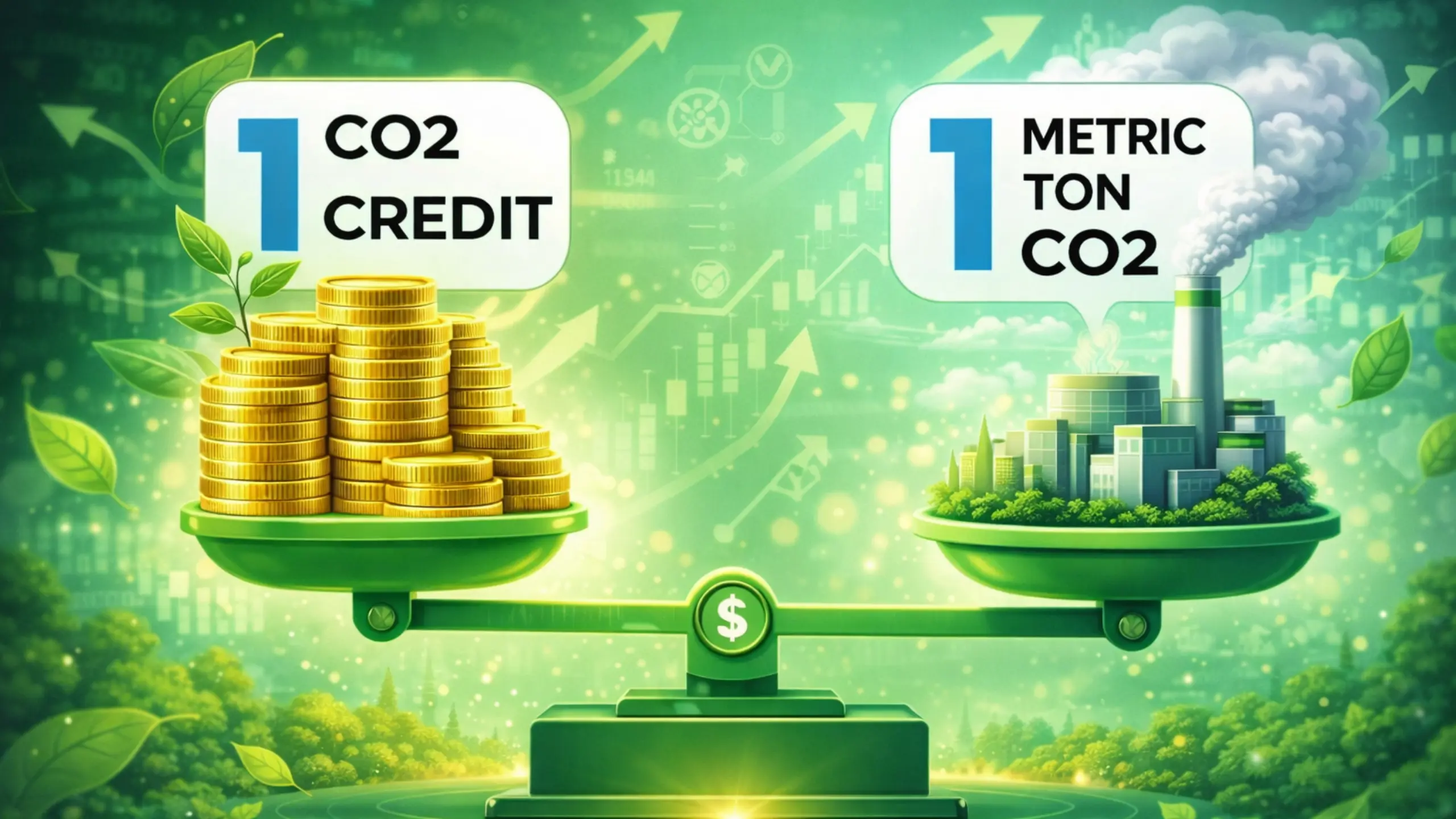
The domestic carbon exchange will be piloted until December 31, 2028.
4. What do Enterprises need to prepare to participate in the carbon market?
Việc tham gia vào thị trường tín chỉ carbon không đơn thuần là trách nhiệm môi trường, mà là một cơ hội chiến lược để doanh nghiệp Việt Nam tối ưu hóa sức mạnh thương hiệu và xác lập lợi thế cạnh tranh vượt trội trên chuỗi giá trị toàn cầu.
Trước khi tham gia, doanh nghiệp cần nắm vững cơ chế vận hành của thị trường carbon, bao gồm hệ thống quy định pháp luật, các tiêu chuẩn kỹ thuật áp dụng và quy trình chứng nhận đối với hạn ngạch phát thải và tín chỉ carbon. Đồng thời, việc tìm hiểu các loại hình dự án giảm phát thải có khả năng tạo ra tín chỉ carbon sẽ giúp doanh nghiệp xác định mô hình phù hợp với đặc thù sản xuất, quy mô hoạt động và định hướng phát triển bền vững.
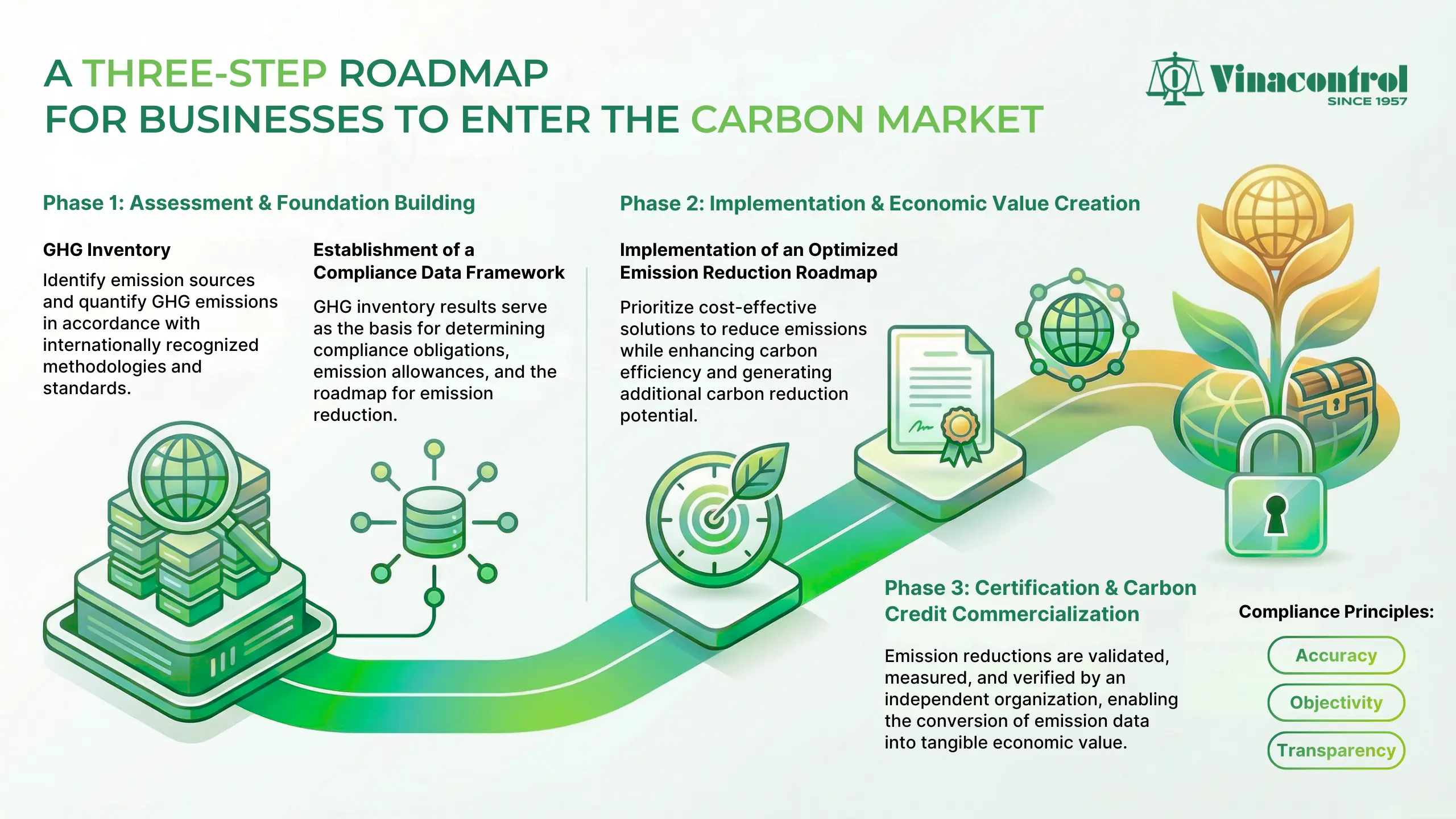
A three-step roadmap for businesses to enter the carbon market
Enterprises should focus on the following three core pillars:
4.1. Emission Status Assessment
Greenhouse gas inventory is the foundational step to identify emission sources and calculate emission volumes using accepted methods and standards. Inventory results serve as the basis for:
-
Determining emission quota compliance obligations;
-
Developing emission reduction targets and roadmaps;
-
Preparing data for carbon credit generation projects.
4.2. Executing Optimal Emission Reduction Roadmaps
Based on the emission status, enterprises must define specific, time-bound reduction targets linked to each emission source. Prioritizing cost-effective solutions capable of forming emission reduction projects will enable enterprises to proactively participate in the carbon market in the future.
4.3. Certification and Commercialization of Carbon Credits
To transform emission reduction efforts into economic value (carbon credits), enterprises must emphasize the accuracy, transparency, and verifiability of emission data. Accordingly, an enterprise's emission profile must be appraised and verified by an independent organization to ensure objectivity and data reliability. A complete and high-quality profile will help the enterprise gain higher evaluation scores and increase chances of receiving carbon credits.
5. Vinacontrol - Partnering with Vietnamese Enterprises to Conquer the Carbon Market
With nearly 70 years of experience in inspection, testing, certification, and environmental consultancy, Vinacontrol accompanies Vietnamese enterprises throughout the carbon market participation journey, from preparation to actual implementation.
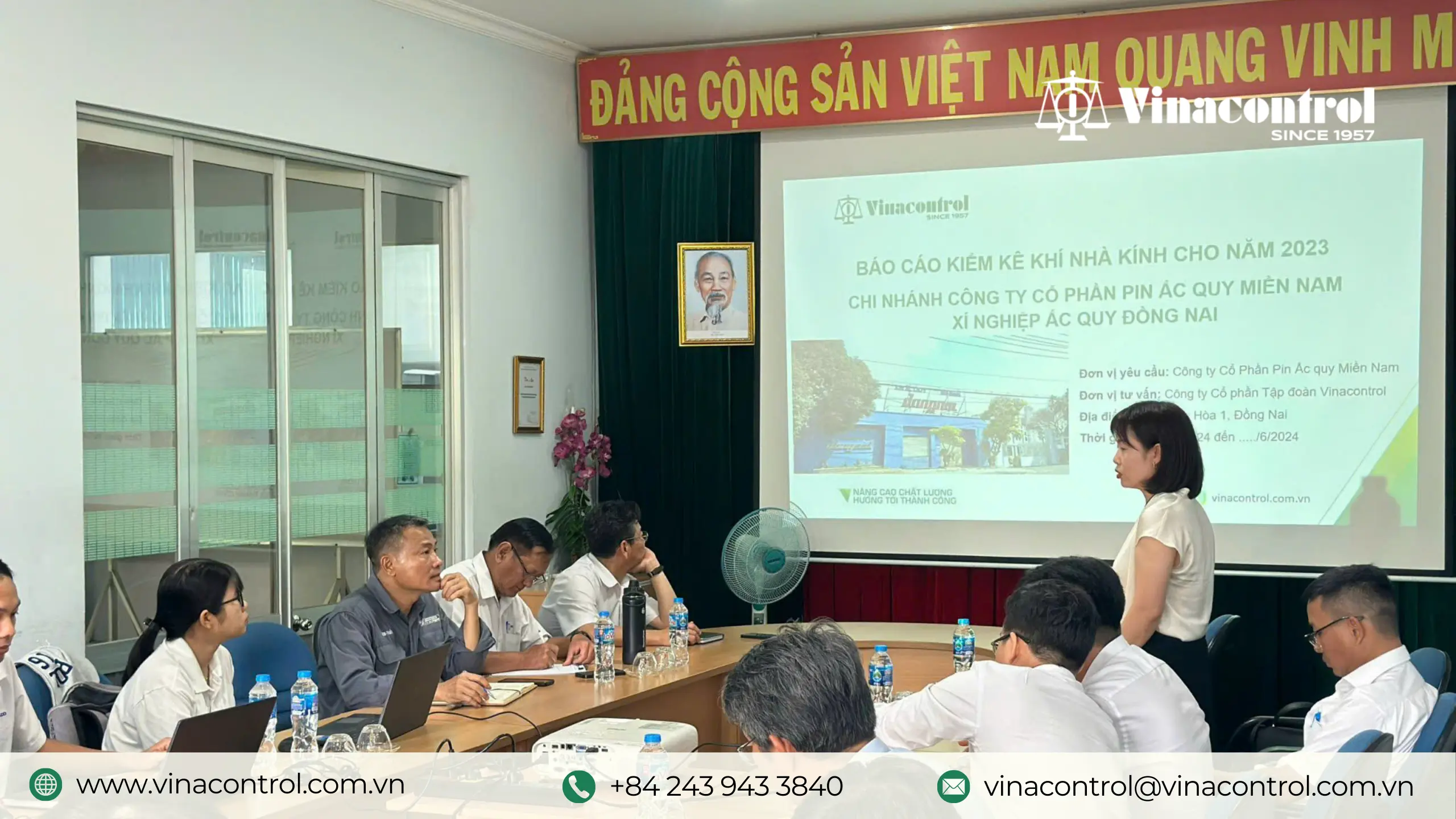
Vinacontrol implements GHG inventory services in accordance with ISO 14064-1 and Decree No. 06/2022/ND-CP at the branch of Dry Cell and Storage Battery JSC. (PINACO)
Vinacontrol's Solutions:
-
Consultancy for GHG inventory reporting in compliance with ISO 14064-1 and current legal requirements;
-
Consultancy for developing emission reduction plans tailored to specific industry characteristics;
-
Independent validation and verification of emission data and reduction projects, ensuring transparency and reliability before trading on the domestic carbon exchange.
In the context of the official formation of the carbon exchange, early and standardized preparation with the support of a reputable professional organization will help enterprises proactively seize market opportunities while fully meeting increasingly strict legal requirements.