VI
VI
 EN
EN










Rice Inspection
Table Of Contents
Table Of Contents
 Service Background
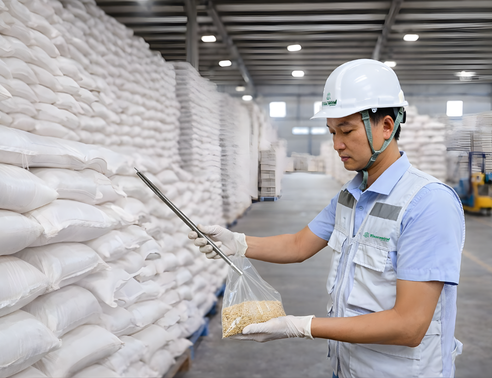
Rice inspection is a critical step to ensure the quality, safety, and compliance of each shipment before transaction or export.
Vinacontrol’s services assist businesses in:
- Managing impurities, moisture content, pests, heavy metal contamination, or pesticide residues
- Meeting the requirements of demanding markets such as the EU, USA, Philippines, Middle East, and Africa
- Proving quality to buyers, importers, and regulatory authorities
- Minimizing commercial disputes and losses during transportation
Vinacontrol supports businesses in inspecting a wide variety of rice products in accordance with domestic and international standards.
When is Rice Inspection Required?
- Prior to signing sales contracts
- Before packing, loading, and container sealing
- During customs clearance or specialized inspections
- In the event of disputes regarding quality, quantity, impurities, or damage
- When exporting to markets that require an independent Certificate of Inspection
Applicable Standards
- ISO/DIS 7301: Rice - Specification.
- Codex Standard for Rice.
- TCVN 1643:2008: White rice – Test methods.
- QCVN 8-1:2011/BYT: National technical regulation on the limits of mycotoxin contamination in food
- TCVN 8049:2009: Rice – Determination of multi-pesticide residues – Gas chromatographic method
- QCVN 8-2:2011/BYT: National technical regulation on the limits of heavy metal contamination in food
- QCVN 8-3:2012/BYT: National technical regulation on microbial contamination in food
- TCVN 5644:2008: Standard for white rice varieties of the species Oryza sativa L
Scope of Services
Vinacontrol’s rice inspection services include:
1. Quantity and Weight Inspection
- Tallying, volumetric measurement, and weight determination
- Supervision of packing, loading, and discharging
- Pre-shipment Inspection (PSI)
2. Quality Inspection
Testing based on standards and regulations:
- Sensory Indicators: Color, odor, taste, polish, head rice/chalky kernel ratio, discolored kernels, impurities, etc.
- Physicochemical Indicators: Moisture content, whiteness, protein, milling degree, etc.
- Microbiological Indicators: Coliforms, E. coli, Salmonella, molds, mycotoxins (Aflatoxin groups B & G)
- Heavy Metals: Arsenic, Cadmium, Lead, Copper, Zinc, Mercury, etc.
- Pesticide Residue Screening: Over 300 active ingredients, including Chlorpyrifos, Acetamiprid, Hexaconazole, Buprofezin, etc.
- Other Safety Indicators: RoHS compliance; radioactivity testing in food (upon request)
3. Inspection of Packaging, Packing, and Marking
4. Damage Survey/Inspection
5. Auxiliary Services: Rice Fumigation
Meeting mandatory requirements of import markets:
- Phosphine (PH₃): International standard, accepted by EU, USA, and Philippines markets
- Methyl Bromide (CH₃Br): According to specific market requirements
Fumigation Scope:
- Containers
- Warehouses
- Stored commodities
- Vessels and barges
- Wood Packaging Materials (ISPM 15)