VI
VI
 EN
EN







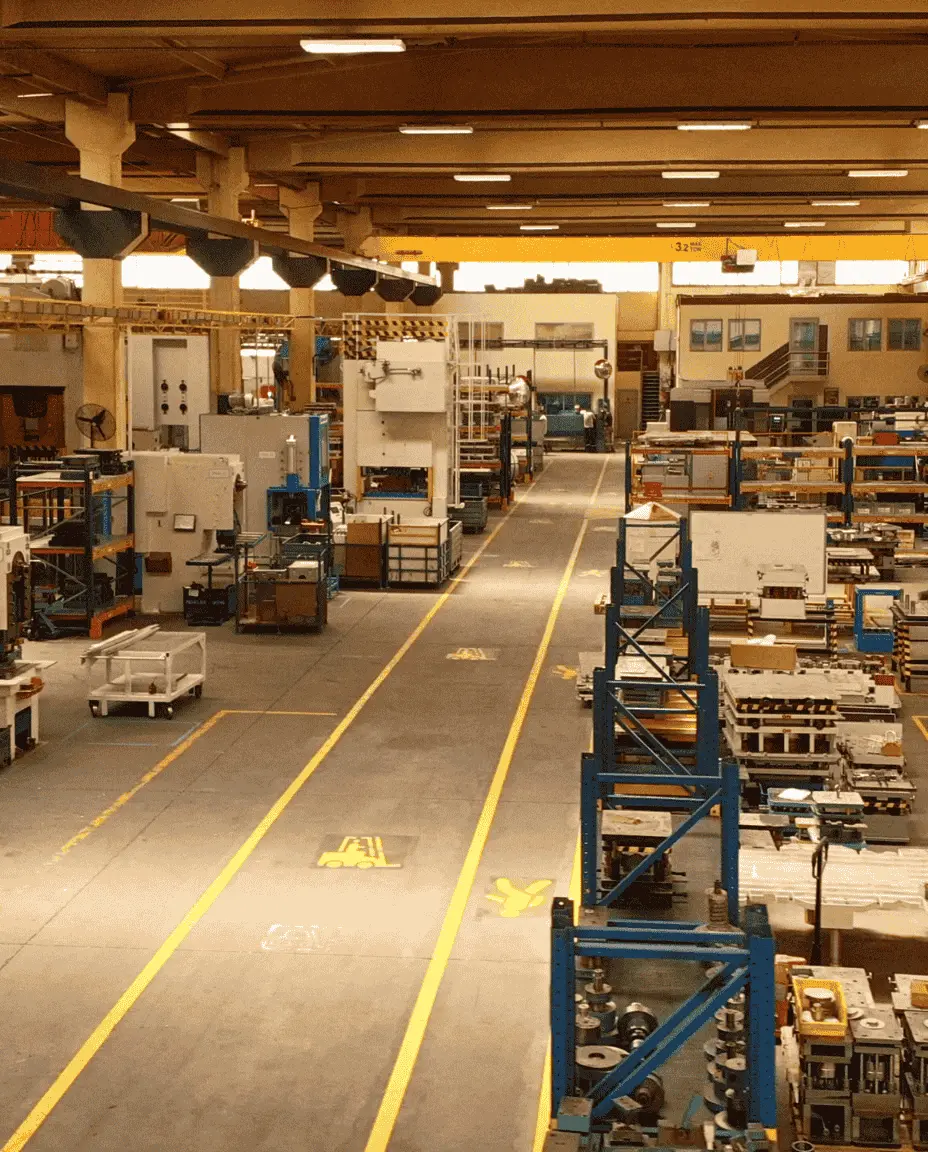




GHG Inventory in the Textile and Garment Industry: The Foundation for Sustainable Production and Export Competitiveness
Table Of Contents
Table Of Contents
As one of Vietnam's flagship export sectors, the textile and garment industry generated nearly USD 46 billion in export turnover in 2025. However, this impressive growth brings mounting pressure regarding energy, water, and chemical consumption, alongside greenhouse gas (GHG) emissions across the entire value chain - from spinning, weaving, dyeing, and finishing to garment manufacturing and logistics.
As major markets like the EU, US, Japan, and South Korea tighten regulations on ESG, data traceability, chemical safety, and carbon reduction, GHG inventory is no longer voluntary. It has become an essential prerequisite for textile enterprises to ensure regulatory compliance, preserve export advantages, and transition toward sustainable manufacturing models.
This article outlines the strategic role of GHG inventory, key legal frameworks, critical emission scopes, and the compliance workflow aligned with Decree No. 06/2022/ND-CP, Decree No. 119/2025/ND-CP, and ISO 14064-1.
Why Textile Enterprises Need a GHG Inventory?
The textile industry features a complex supply chain with highly resource-intensive processes. Activities such as boiler operations, dyeing, finishing, wastewater treatment, raw material transport, and product distribution generate significant GHG emissions.
Conducting a GHG inventory enables businesses to:
- Accurately pinpoint major emission sources across production and operations.
- Fulfill statutory GHG inventory and reporting mandates under domestic law.
- Provide verified data to satisfy ESG, CDP, SBTi, or brand-specific requirements.
- Reduce expenditures on energy, fuel, water, and input resources.
- Sharpen competitive advantages within global supply chains.
- Proactively navigate carbon barriers, green tariffs, and traceability requirements in export markets.
Ultimately, a GHG inventory is more than a compliance report - it is the strategic foundation for understanding a company's carbon footprint, charting reduction pathways, and managing carbon risks effectively.
Who Must Conduct a GHG Inventory?
Under Decision No. 13/2024/QD-TTg, dyeing, finishing, and garment facilities with an annual energy consumption of 1,000 TOE (Tonne of Oil Equivalent) or more are legally mandated to conduct a GHG inventory.
Beyond domestic regulations, major export markets like the EU and US are continuously escalating demands for sustainability, chemical safety, supply chain transparency, and carbon reduction.
GHG Emission Scopes in the Textile Industry
To execute an effective inventory, enterprises must categorize emissions into three distinct scopes:
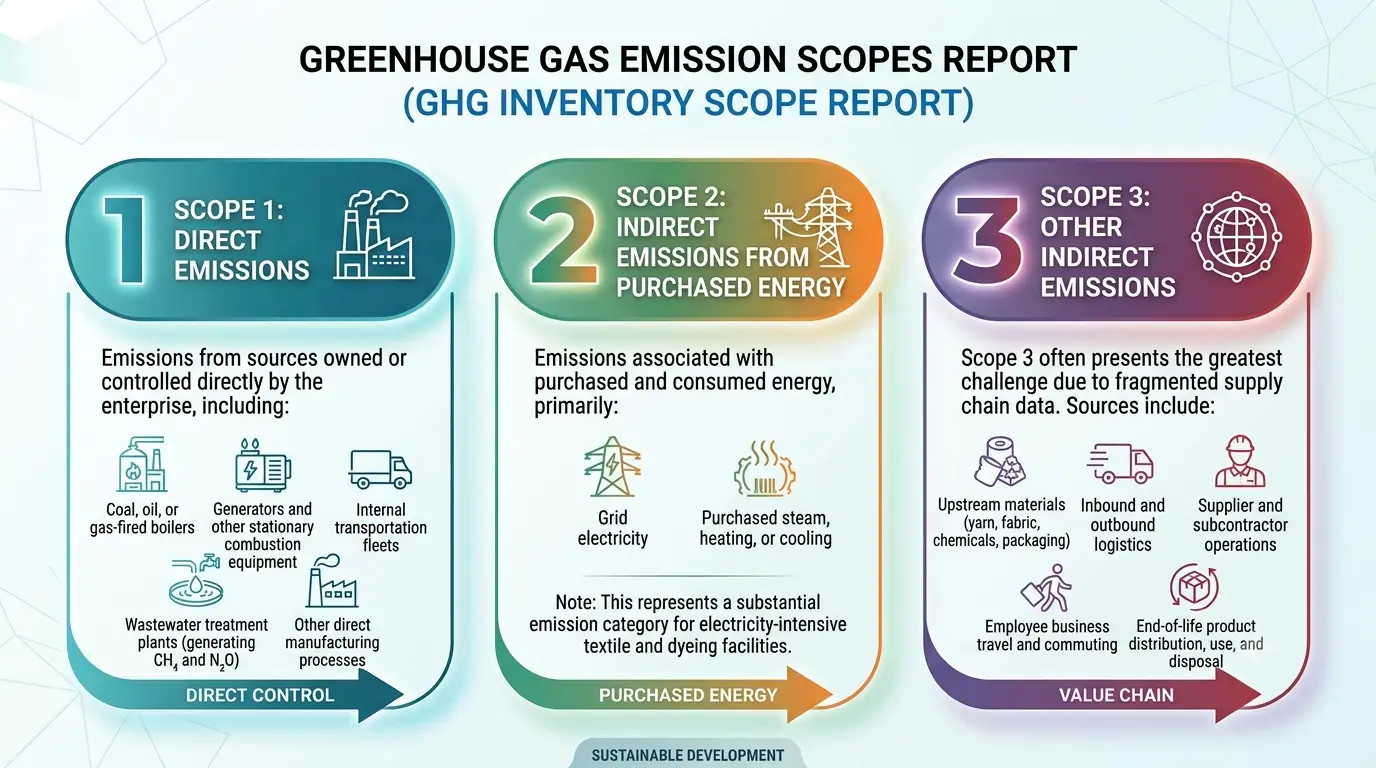
GHG Emission Scopes in the Textile Industry
Scope 1: Direct Emissions
Emissions from sources owned or controlled directly by the enterprise, including:
- Coal, oil, or gas-fired boilers;
- Generators and other stationary combustion equipment;
- Internal transportation fleets;
- Wastewater treatment plants (generating CH₄ and N₂O);
- Other direct manufacturing processes.
Scope 2: Indirect Emissions from Purchased Energy
Emissions associated with purchased and consumed energy, primarily:
- Grid electricity;
- Purchased steam, heating, or cooling.
This represents a substantial emission category for electricity-intensive textile and dyeing facilities.
Scope 3: Other Indirect Emissions
Scope 3 often presents the greatest challenge due to fragmented supply chain data. Sources include:
- Upstream materials (yarn, fabric, chemicals, packaging);
- Inbound and outbound logistics;
- Supplier and subcontractor operations;
- Employee business travel and commuting;
- End-of-life product distribution, use, and disposal.
Given the lengthy and fragmented nature of the textile supply chain, companies should adopt targeted data collection methods, prioritizing material emission sources before progressively expanding the inventory scope.
GHG Inventory Process for Textile Enterprises
Vinacontrol assists textile enterprises in conducting GHG inventories and developing compliance reports that meet the requirements of Decree No. 06/2022/ND-CP, Decree No. 119/2025/ND-CP, and ISO 14064-1 through a structured workflow:
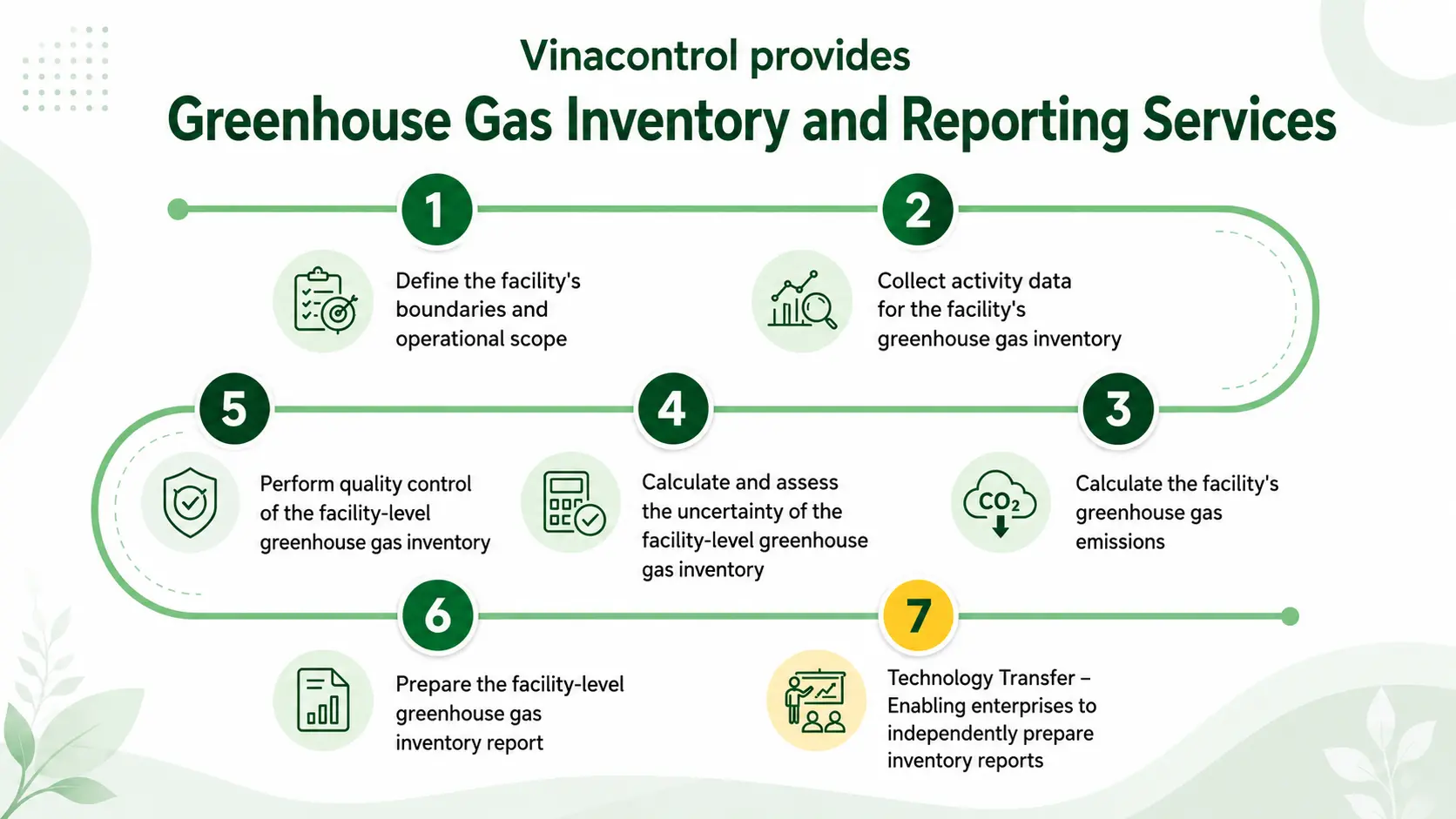
GHG Inventory Process for Textile Enterprises
Industry-Specific Challenges
During GHG accounting, textile companies frequently encounter distinct hurdles:
- Data fragmentation across multiple factories, mills, or subcontracted units.
- High resource intensity (water, heat, chemicals) in dyeing and finishing stages.
- Legacy machinery inflating energy consumption and operating costs.
- Talent shortages in specialized ESG, carbon management, and reporting roles.
- Scope 3 data complexity regarding third-party suppliers, logistics, and product lifecycles.
- Stringent brand requirements demanding highly granular, auditable data.
Enterprises should prioritize material emission sources (electricity, fuel, boilers, wastewater) before gradually scaling up to supply chain and Scope 3 data.
Vinacontrol: Your Strategic Partner in GHG Inventory
Leveraging deep expertise in GHG inventory, conformity assessment, and sustainable development, Vinacontrol helps businesses build transparent emission databases, standardize reporting, and advance carbon governance.
Our specialized services include:
- Assessing current baselines and determining regulatory compliance obligations.
- Defining organizational boundaries, operational boundaries, and material emission sources.
- Collecting, reviewing, and standardizing activity data.
- Calculating Scope 1, 2, and 3 GHG emissions.
- Compiling GHG inventory reports compliant with ISO 14064-1:2018 and prevailing regulations.
- Advising on emission reduction pathways, energy efficiency, and operational optimization.
- Providing independent third-party GHG inventory verification and validation.
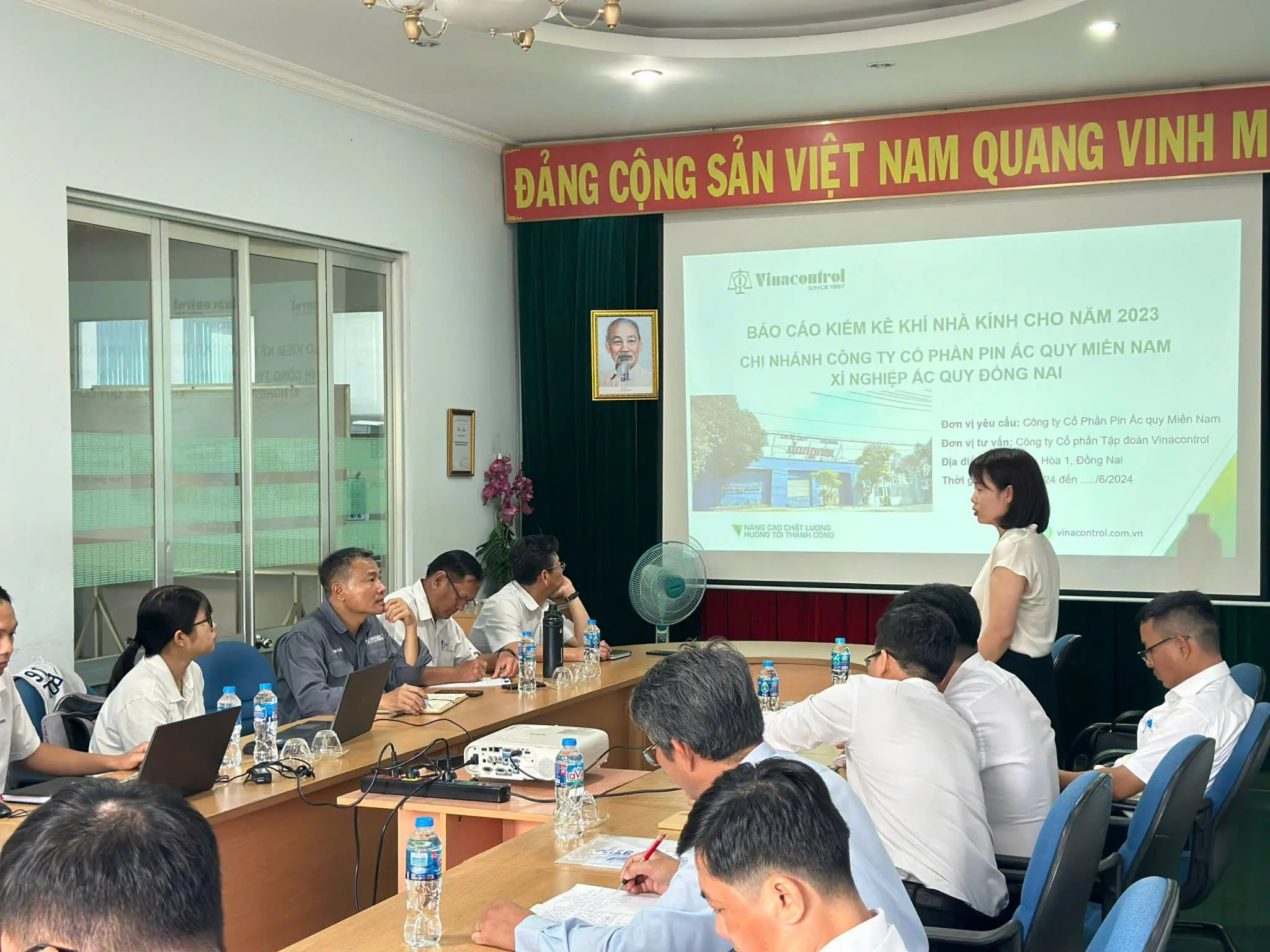
Vinacontrol – A Trusted Partner for Statutory GHG Inventory Compliance
A GHG inventory is the vital first step toward systematic emission management. Standardizing and controlling carbon data allows textile enterprises to optimize costs, ensure legal compliance, elevate ESG ratings, and solidify global market positioning.
In the green transition, a credible data foundation is essential for strategic decision-making. Vinacontrol stands ready to empower textile and garment enterprises with transparent, precise emission management systems aligned with both domestic mandates and international standards.