VI
VI
 EN
EN










Carbon credits and the corporate value proposition in the Net Zero era
Table Of Contents
Table Of Contents
What was once perceived as a mere environmental compliance obligation is rapidly transforming into a novel asset class within the low-carbon economy. As the regulatory framework for Vietnam’s carbon market approaches maturity, enterprises stand not only before the stringent mandate to decarbonize but also at the threshold of an unprecedented opportunity: converting emissions reduction outcomes into tangible economic value.
Against this backdrop, the promulgation of Decreet No. 112/2026/ND-CP, effective from May 19, 2026, serves as a critical link in bridging the architecture of Vietnam's domestic carbon market. This opens new horizons for enterprises on their sustainable development journey.
1. "Decoding" the Technical Essence of Carbon Credits
Carbon markets are established through international cooperative mechanisms designed to mitigate greenhouse gas (GHG) emissions. Among these, the Kyoto Protocol under the United Nations Framework Convention on Climate Change (UNFCCC) serves as the foundational cornerstone that unlocked the formation and evolution of the global carbon market.
Under this mechanism, nations can trade or transfer emissions reduction outcomes to achieve their committed climate targets. Consequently, a new tradable unit representing GHG emissions or reductions emerged in the marketplace - most commonly categorized as carbon credits and emission allowances.
Given that diverse greenhouse gases are converted into metric tons of carbon dioxide equivalent (CO2e), these transactions are collectively referred to as carbon trading, which collectively shapes the global carbon market.
A carbon credit is a tradable certificate or permit that grants the holder the right to emit a specific amount of greenhouse gases (equivalent to one metric ton of CO2) into the atmosphere. One carbon credit equals one metric ton of carbon dioxide equivalent (tCO2e) that has been reduced or sequestered through verified, real-world projects or activities compared to a business-as-usual scenario (Baseline).
It is vital to distinguish between two core concepts:
-
Emission Allowance: The volume of GHG emissions that a nation, organization, or individual is legally permitted to release within a specified timeframe, calculated in metric tons of carbon dioxide (CO2) or metric tons of carbon dioxide equivalent (CO2e).
Through GHG emissions inventories, governments ascertain total national emissions and the emissions intensity per unit of product or service, thereby allocating the necessary allowances to emitting production facilities. Facilities are strictly bound to operate within their allocated caps. Should their operational needs exceed these caps, they must purchase surplus allowances from other entities. Conversely, if a facility possesses unused allowances, it can bank or trade them in the carbon market.
-
Carbon Credit: A commercially tradable certificate representing the right to emit one ton of CO2. Carbon credits are generated when emissions reduction outcomes from a specific project are formally verified by an independent body and recognized among participating parties.
These credits can subsequently be commercialized or traded on voluntary or compliance markets, generating green revenue streams for enterprises. Thus, a carbon credit serves not only as an efficient environmental management tool but also as an economic catalyst, driving sustainable practices and mitigating climate change impacts.
2. Carbon Market Architecture and Operational Mechanisms
- The Compliance Carbon Market: A regulated trading platform established and governed by national or regional governmental authorities. Within this market, covered entities are legally mandated to participate to fulfill their statutory obligations regarding GHG control and reduction.
Operating primarily on a Cap-and-Trade mechanism, regulators enforce an absolute emissions ceiling (cap) and allocate corresponding emission allowances to heavy emitters. Enterprises that emit below their threshold can monetize their surplus by selling allowances, whereas those exceeding their caps must procure additional allowances to maintain regulatory compliance.
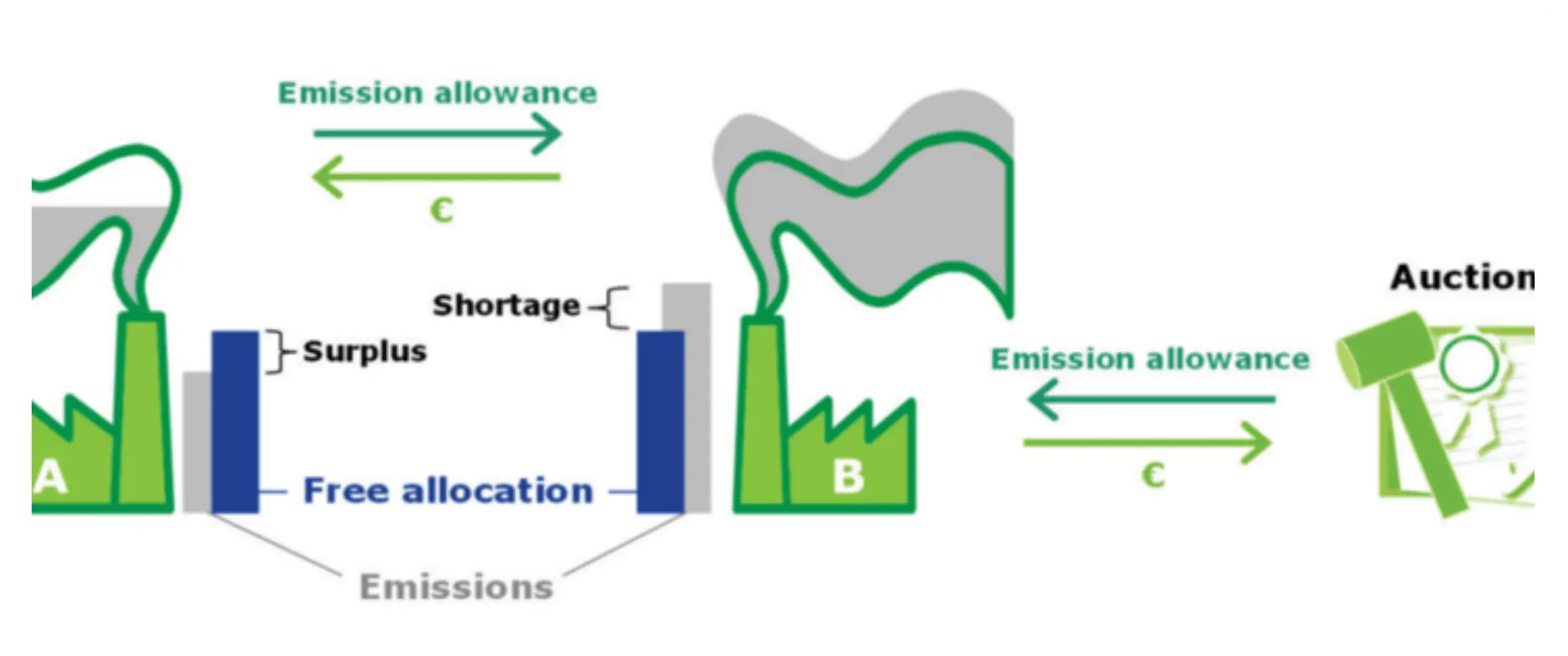
The Compliance Carbon Market
Prominent compliance carbon markets globally include:
- EU Emissions Trading System (EU ETS)
- China National Emissions Trading System (China National ETS)
- California Cap-and-Trade Program
- Korea Emissions Trading Scheme (K-ETS)
- New Zealand Emissions Trading Scheme (NZ ETS)
- The Voluntary Carbon Market: Distinct from its compliance counterpart, the voluntary carbon market operates independently of direct statutory mandates. Individuals, corporations, or institutional organizations engage in trading carbon assets -predominantly carbon credits - on a voluntary basis to advance their sustainable development goals, corporate ESG strategies, carbon neutrality commitments, and green financing opportunities.
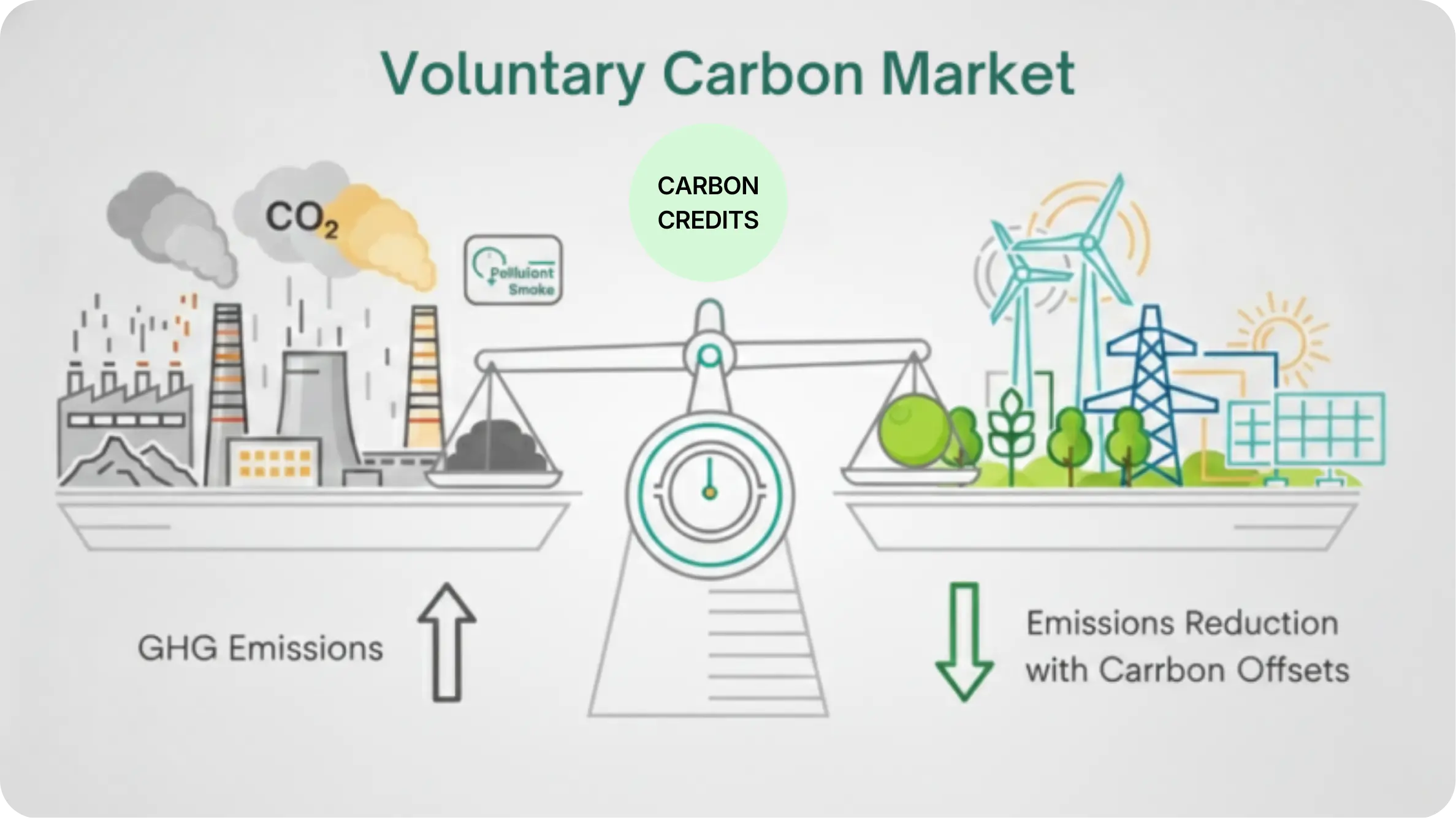
The Voluntary Carbon Market
Decree No. 112/2026/ND-CP of the Government, governing the international exchange of GHG mitigation outcomes and carbon credits, establishes the definitive legal bedrock for Vietnam to integrate into the international carbon market. By domesticating the provisions of Article 6 of the Paris Agreement, this decree serves as a catalyst for Vietnam to realize its overarching commitment to Net Zero emissions by 2050.
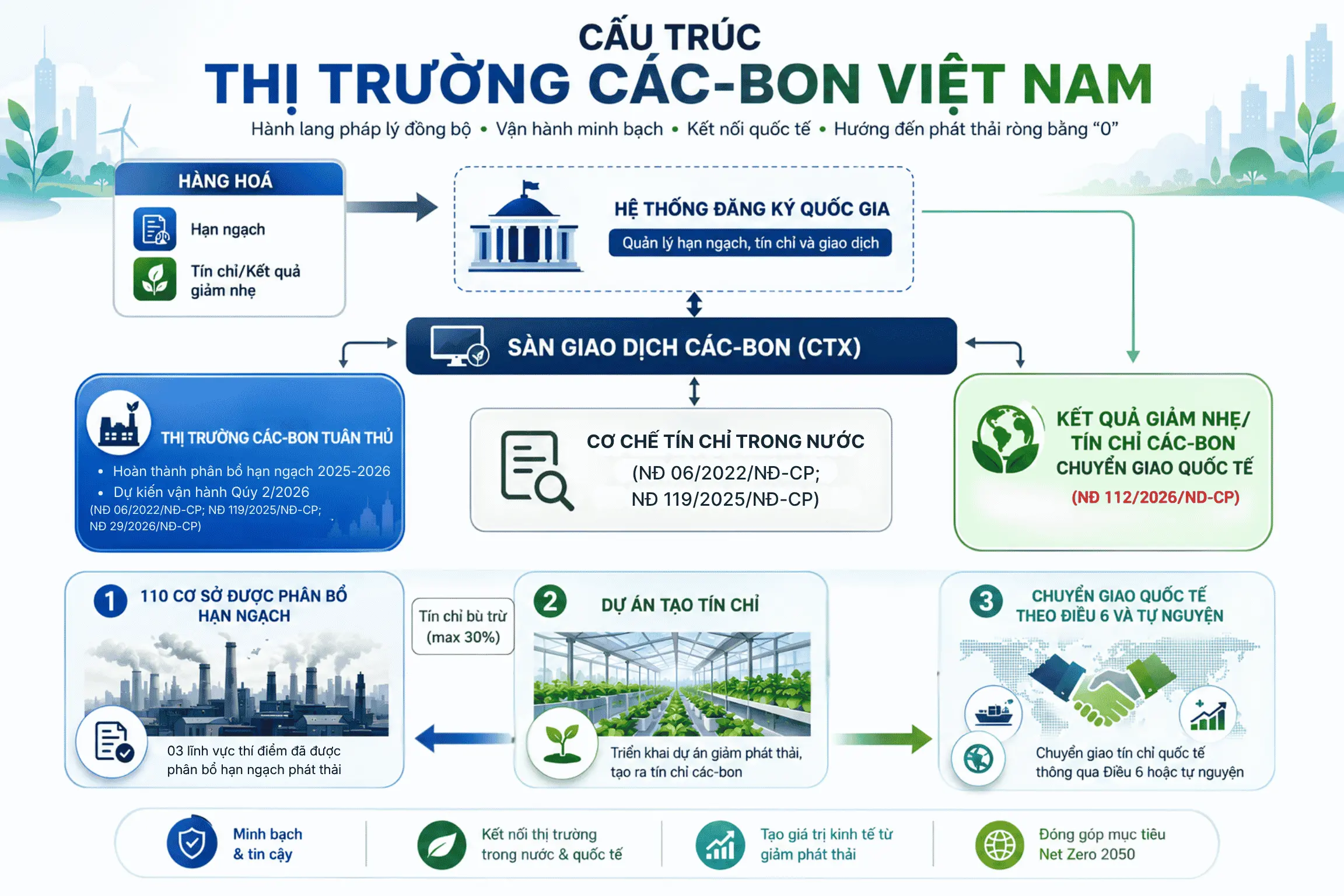
Vietnam Carbon Market Structure
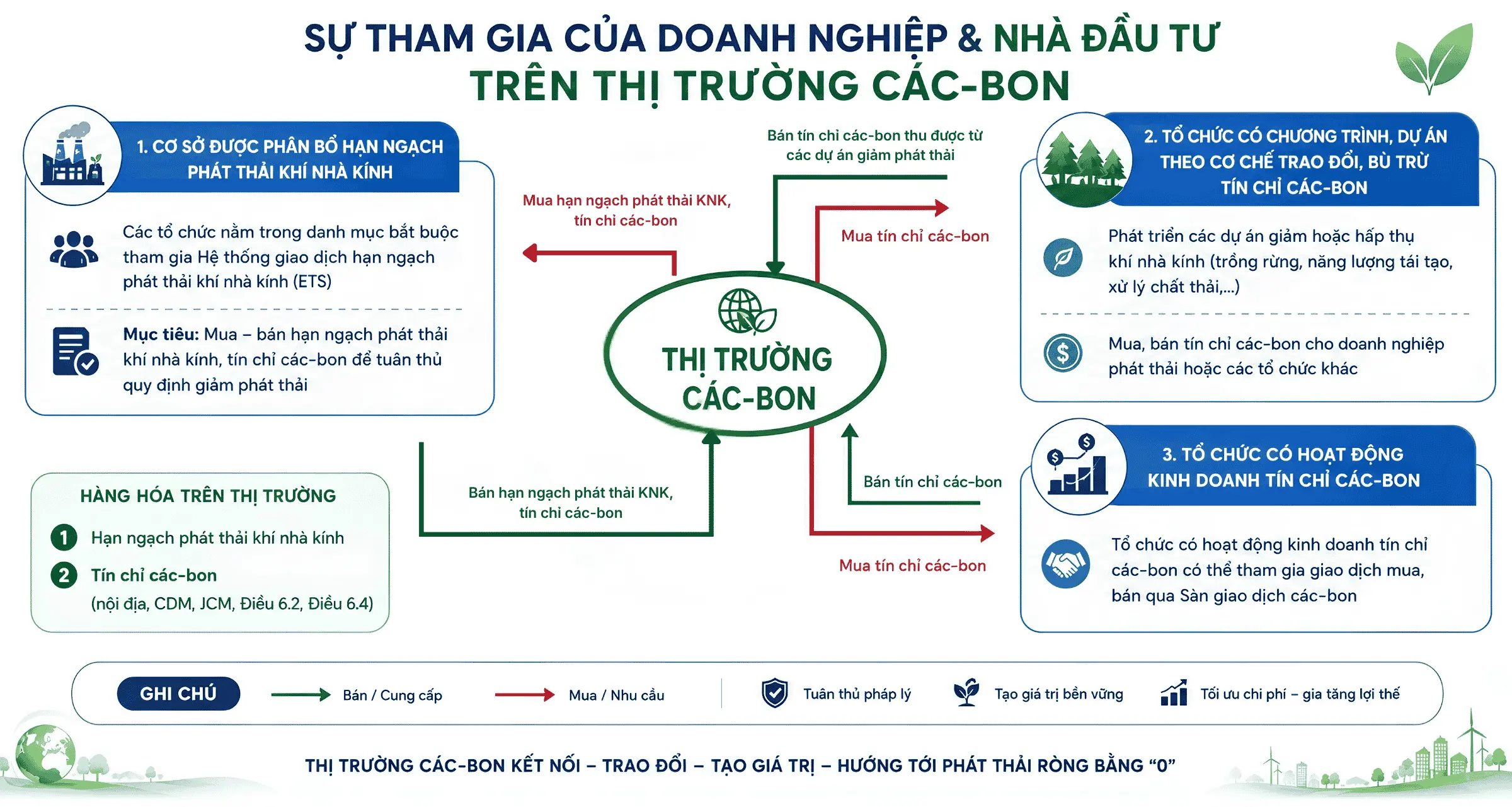
Enterprise and Investor Participation in the Carbon Market
3. Compliance Roadmap and Strategic Recommendations for Vietnamese Enterprises
-
2020: The Law on Environmental Protection 2020 officially codifies and recognizes the legal framework for a domestic carbon market for the first time.
-
2022: Decree No. 06/2022/ND-CP is enacted, outlining detailed regulations on GHG emissions mitigation and ozone layer protection.
-
2024: Decision No. 13/2024/QD-TTg of the Prime Minister issues the updated, definitive directory of sectors and emitting facilities mandated to conduct mandatory GHG inventories.
-
2025: Decree No. 119/2025/ND-CP is promulgated to amend and supplement Decree 06/2022/ND-CP; Decision No. 232/QD-TTg of the Prime Minister approves the master Scheme for the Establishment and Development of the Carbon Market in Vietnam.
-
2026: Decree No. 29/2026/ND-CP regulates the Domestic Carbon Trading Exchange; Decree No. 112/2026/ND-CP governs the international exchange of GHG mitigation outcomes and carbon credits; Decision No. 263/QD-TTg of the Prime Minister approves the pilot national GHG emission allowance cap for the 2025–2026 period.
-
2029: Full-scale official commercial operations of Vietnam’s domestic carbon trading exchange commence under Decision No. 232/QD-TTg.
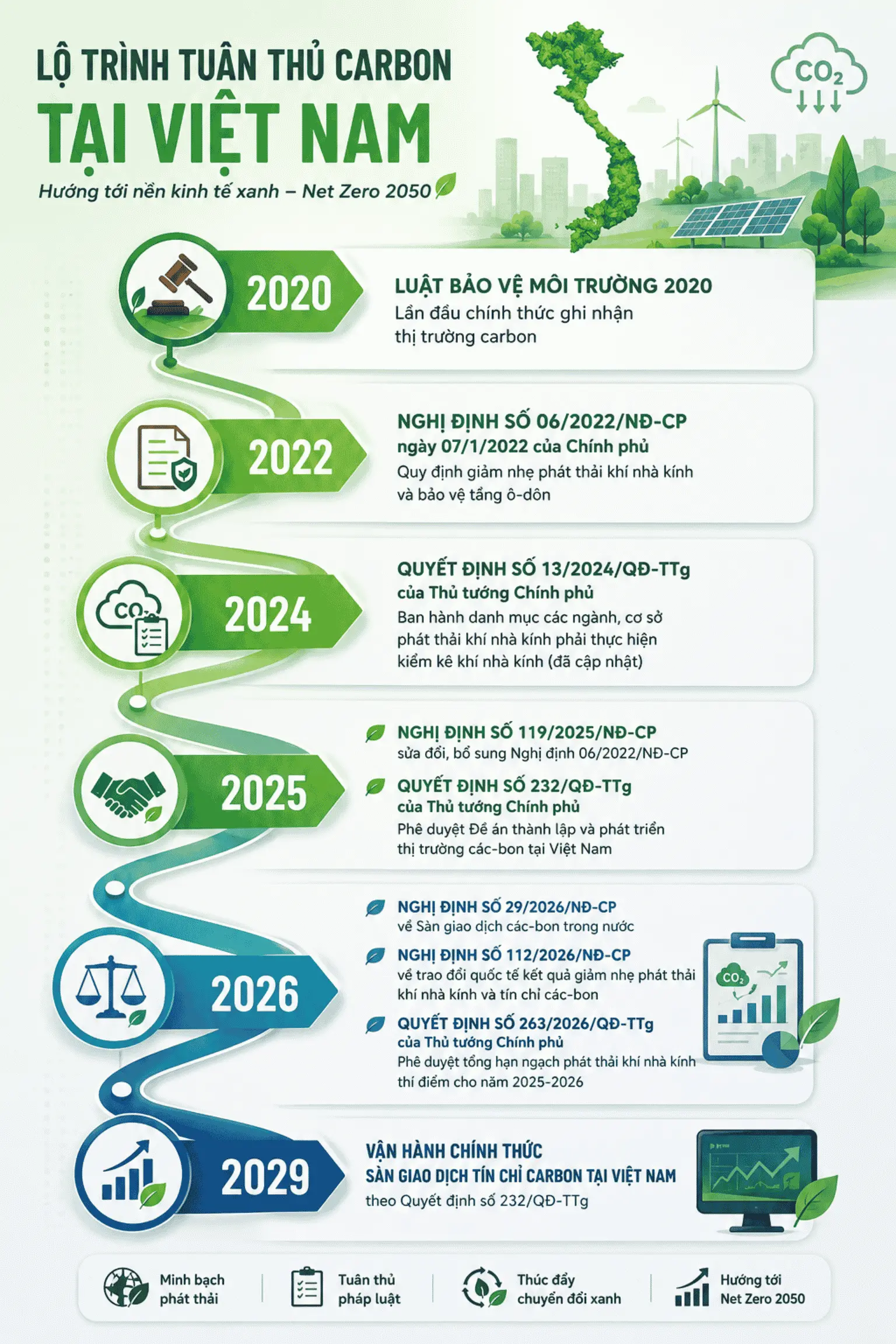
The Regulatory Framework is Rapidly Closing the Timeline Gap
⟶ Vinacontrol Experts recommend: In this rapidly evolving landscape, a comprehensive GHG Inventory must be recognized as the foundational point for enterprises to identify their own "carbon assets." Companies must ascertain exactly how much they emit, where those emissions occur, and what their mitigation potential entails. Crucially, they must evaluate whether these future reductions can be translated into premium carbon credits, a distinct competitive advantage, or a baseline prerequisite to integrate deeply into global supply chains.
Vinacontrol – Your Trusted Partner on the Green Transition and Sustainable Development Journey
As a pioneer and the most prestigious conformity assessment organization in Vietnam, Vinacontrol offers a comprehensive ecosystem of solutions. We empower enterprises to master their Net Zero roadmaps and navigate carbon markets through 05 specialized pillars:
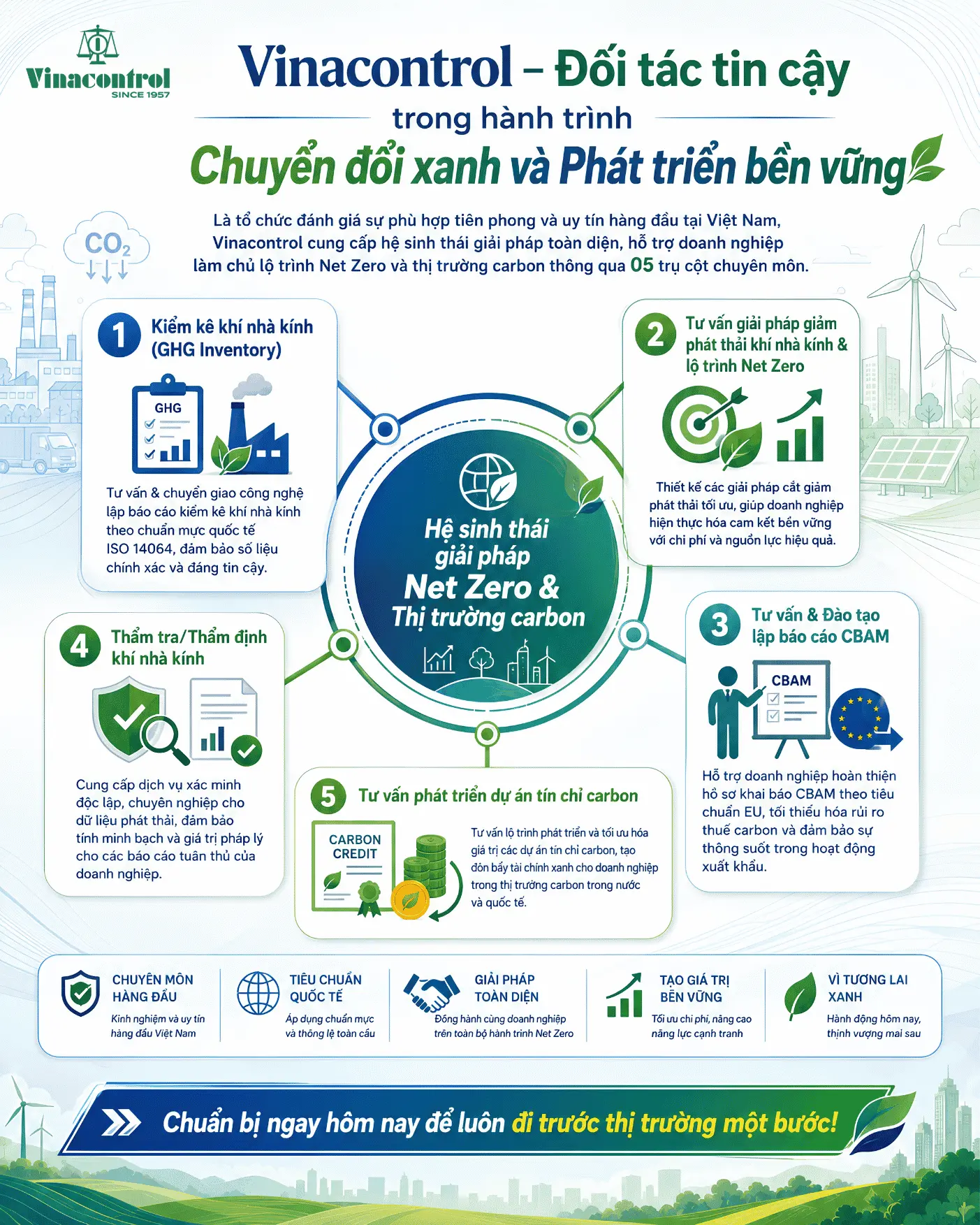
Vinacontrol's Soutions for Sustainable Developmen
1. GHG Inventory Consulting: Providing advisory services and technology transfer for compiling greenhouse gas inventory reports in strict accordance with the international ISO 14064 standard, ensuring data accuracy and utmost reliability.
2. GHG Mitigation Solutions & Net Zero Roadmaps: Custom-designing optimized decarbonization pathways that enable enterprises to materialize their sustainability commitments with maximum cost and resource efficiency.
3. CBAM Advisory & Reporting Services: Assisting enterprises in perfecting their Carbon Border Adjustment Mechanism (CBAM) declarations aligned with stringent EU standards, effectively minimizing carbon tax exposures and ensuring seamless export continuity.
4. GHG Validation and Verification: Delivering independent, highly professional verification services for emissions data. This guarantees transparency and imparts legally binding integrity to an enterprise's regulatory compliance reports.
5. Carbon Credit Project Development: Providing strategic advisory on developing and maximizing the market value of carbon credit projects, thereby creating a powerful green financing lever for enterprises in both domestic and international carbon arenas.
Prepare today to remain a step ahead of the market tomorrow!